FSSAI Food Additive Compliance in 2025: What Chemical Buyers and Food Manufacturers Must Know
Categories
Uncategorized

India’s food processing industry is one of the largest in the world, valued at over USD 300 billion and growing. Behind every packaged food product, there are dozens of chemical additives preservatives, acidulants, emulsifiers, stabilisers each of which must comply with the Food Safety and Standards Authority of India (FSSAI) regulations. For chemical suppliers, food manufacturers, and procurement teams, 2025 has brought renewed focus on FSSAI compliance. Enforcement has tightened, labelling requirements have evolved, and buyers are increasingly asking for verified, FSSAI-compliant raw materials. If you source food-grade chemicals, this guide is essential reading. What Is FSSAI and Why Does It Matter for Chemical Procurement? The Food Safety and Standards Authority of India (FSSAI) is the apex body governing food safety in India under the Food Safety and Standards Act, 2006. It sets standards for food additives including maximum permitted levels (MPLs), permitted applications, and labelling requirements. For chemical buyers, this means: Only FSSAI-approved additives can be used in food products sold in India Additives must be used within the specified maximum permitted levels for each food category Suppliers must be able to provide documentation confirming the additive grade and purity Non-compliant additives can lead to product recall, penalties, and loss of FSSAI licence Key Food Additive Categories and FSSAI-Approved Chemicals Preservatives Preservatives prevent microbial spoilage and extend shelf life. FSSAI-approved preservatives commonly used in the industry include: Calcium Propionate  approved for use in bread, bakery products, flour confectionery Sodium Propionate  cheese, bakery, dried fruit applications Sodium Acetate / Sodium Diacetate  condiments, snack foods, sauces Potassium Sorbate  beverages, fruit products, cheese Sodium Benzoate  soft drinks, pickles, fruit juices Maximum permitted levels vary by food category for example, calcium propionate in bread is typically permitted up to 3000 mg/kg under FSSAI Schedule II norms. Acidulants and pH Regulators Acidulants adjust and control the pH of food products. Key FSSAI-approved acidulants include: Citric Acid and Citrate Salts (Trisodium Citrate, Tripotassium Citrate) beverages, jams, dairy Acetic Acid and Acetate Salts (Sodium Acetate, Calcium Acetate) condiments, bakery Lactic Acid fermented dairy, beverages, meat products Phosphoric Acid and Phosphate Salts carbonated beverages, processed cheese Emulsifiers and Stabilisers Used in dairy, bakery, and processed foods to maintain texture and consistency. Phosphate salts are key players here including disodium phosphate and trisodium phosphate with specific MPLs for different product categories. Recent FSSAI Updates That Chemical Buyers Should Watch Stricter Labelling for Food Additive Suppliers FSSAI has reinforced requirements that food additive suppliers provide accurate labelling including: the additive name, INS number, purpose of additive, and maximum use level recommendation. Buyers should request this documentation from their chemical suppliers. Harmonisation with Codex Alimentarius India is progressively aligning FSSAI standards with the international Codex Alimentarius Commission standards. This means MPLs for several additives have been revised some tightened, some expanded to new food categories. Companies exporting food products to international markets need to track both FSSAI and Codex standards simultaneously. Increased Surveillance and Testing FSSAI’s enforcement arm has increased surveillance sampling of packaged food products in retail. Products found with non-approved additives or above-limit concentrations face recall and manufacturer penalties. This is driving food manufacturers to be more rigorous in supplier qualification. How to Verify That Your Chemical Supplier Is FSSAI Compliant When sourcing food-grade chemicals, ask your supplier for the following: Certificate of Analysis (COA) confirming purity, assay, and absence of heavy metals FSSAI-compliant grade declaration specifying the additive is suitable for food use ISO certification demonstrating a quality management system is in place MSDS (Material Safety Data Sheet) for safe handling and regulatory reporting INS Number reference International Numbering System code per Codex/FSSAI Common Mistakes Food Manufacturers Make in Additive Procurement Sourcing industrial-grade chemicals instead of food-grade purity and contaminant profiles differ significantly Not verifying MPLs for their specific food category permitted levels vary by application Failing to maintain batch-wise COA records required during FSSAI inspections Assuming that an additive approved in the EU or USA is automatically FSSAI-approved always verify locally Ignoring supplier ISO certification a quality management system is essential for consistent food-grade supply Kanha Life Science LLP: FSSAI-Compliant Food Chemical Supply from Ahmedabad Kanha Life Science LLP has been supplying food-grade and pharmaceutical-grade chemical raw materials since 1983. Our product range includes several FSSAI-relevant additives: Calcium Propionate and Sodium Propionate food-grade preservatives for bakery and dairy Sodium Acetate and Calcium Acetate food-grade acidulants and preservatives Citrate Salts trisodium citrate, tripotassium citrate for beverages and food Phosphate Salts disodium phosphate, trisodium phosphate for processed food applications Sulphate Salts food and agriculture grade We supply with full documentation COA, MSDS, grade declarations and our ISO 9001:2015 certification demonstrates our commitment to consistent quality standards. Conclusion FSSAI compliance is not optional it is the foundation of responsible food manufacturing in India. For chemical buyers and food manufacturers, understanding which additives are permitted, at what levels, and how to verify supplier compliance is essential to avoiding product recalls, penalties, and reputational damage. If you need FSSAI-compliant food-grade chemical raw materials with full documentation support, contact Kanha Life Science LLP. Our team is ready to assist you with the right grade, at the right quality, every time.

Formate Salts: The Rising Stars of Industrial Chemistry You Need to Know About
Categories
Uncategorized

In the world of specialty chemicals, formate salts have long operated in the shadows essential to several major industries, yet rarely the subject of focused attention. That is changing fast. In 2025 and 2026, formate salts are experiencing a significant surge in industrial demand, driven by growth in the construction sector, expansion of the oil and gas industry, increasing leather exports, and the global push toward greener de-icing solutions. For chemical buyers, procurement managers, and industrial manufacturers in India, understanding formate salts what they are, where they are used, and why quality matters is becoming increasingly important. What Are Formate Salts? Formate salts are the metal salts of formic acid (HCOOH), the simplest carboxylic acid. When formic acid reacts with a base (sodium hydroxide, calcium hydroxide, potassium hydroxide, etc.), it forms the corresponding formate salt. The most widely used industrial formate salts include: Sodium Formate (HCOONa) leather tanning, textile processing, road de-icing, reducing agent Calcium Formate (Ca(HCOO)₂) concrete accelerator, animal feed additive, leather tanning Potassium Formate (HCOOK) oil well drilling fluids, aviation de-icing Ammonium Formate (HCOONH₄) pharmaceutical synthesis, laboratory reagent Why Are Formate Salts Trending Right Now? 1. Construction Sector Boom Calcium formate is gaining significant traction as a concrete accelerator and early-strength agent. As India accelerates infrastructure development under programmes like PM Gati Shakti and Smart Cities Mission, demand for construction chemicals including calcium formate is rising sharply. It reduces the setting time of concrete, improves early compressive strength, and is effective even in cold weather construction conditions. 2. Leather Industry Demand India is one of the world’s largest leather exporters. Sodium formate plays a critical role in leather tanning as a masking agent, helping control the pH during the chrome tanning process. With Indian leather exports targeting USD 6 billion by 2027, the demand for consistent, high-quality sodium formate from tanneries across Tamil Nadu, West Bengal, and Uttar Pradesh is strong and growing. 3. Oil and Gas Drilling Fluids Potassium formate and sodium formate are used as high-density brine fluids in oil and gas well completion and workover operations. These formate brines are non-damaging to the reservoir, biodegradable, and compatible with most formation waters making them preferred alternatives to traditional chloride brines. With global upstream oil activity recovering, demand from this sector is robust. 4. Green De-icing Alternatives Sodium formate and potassium formate are emerging as environmentally preferred alternatives to traditional chloride-based road and runway de-icing agents. Unlike chlorides, formate salts are biodegradable and significantly less corrosive to infrastructure and vehicles. European airport authorities have increasingly adopted potassium formate for runway de-icing, and this trend is influencing procurement decisions globally. 5. Animal Feed Acidifier Calcium formate is approved as a feed additive in many markets for its antimicrobial properties and role in improving feed conversion ratios in poultry and swine production. With India’s animal husbandry sector expanding, this represents a growing domestic market for food-grade calcium formate. Comparing Sodium Formate and Calcium Formate: Key Differences Sodium Formate: Water-soluble white powder/granules primary use in leather and textile Calcium Formate: Off-white powder, lower solubility  primary use in construction and feed Both: Effective reducing agents, moderate toxicity, biodegradable Sodium Formate: Higher demand volume in India currently Calcium Formate: Higher growth rate due to construction sector expansion Quality Parameters for Industrial Formate Salts When sourcing formate salts for industrial use, buyers should verify: Assay / purity  minimum 98% for most industrial applications Heavy metal content  critical for leather and feed-grade applications Moisture content  excess moisture affects shelf life and handling Particle size and bulk density  important for metering and mixing in construction applications pH of solution  relevant for leather tanning process compatibility Kanha Life Science LLP: Your Trusted Formate Salt Supplier in India With decades of experience in specialty chemical supply from Ahmedabad, Kanha Life Science LLP provides reliable access to high-quality formate salts for diverse industrial applications. Our strengths include: ISO 9001:2015 certified supply chain Sodium formate and calcium formate available in standard and custom grades Flexible order quantities to suit trial requirements and bulk industrial procurement Accurate technical documentation COA, MSDS, test reports Responsive sales team with chemical expertise Conclusion Formate salts are no longer a niche product. From construction sites to tanneries, oil fields to airports, their unique combination of reactivity, biodegradability, and effectiveness makes them indispensable to modern industry. If you are procuring sodium formate, calcium formate, or other formate salts, choosing the right supplier is critical to your production quality and consistency. Reach out to Kanha Life Science LLP to enquire about availability, grades, and pricing for your specific application.

Citrate Salts: The Unsung Heroes of Food, Pharma, and Beverage Industries
Categories
Uncategorized

When you pick up an energy drink, a pharmaceutical tablet, or even a block of processed cheese, there is a good chance that a citrate salt is quietly doing its job in the background. Citrate salts compounds derived from citric acid are among the most versatile and widely used specialty chemicals in modern manufacturing. Yet most people in the industry overlook them in favour of more commonly discussed chemicals. At Kanha Life Science LLP, we have seen growing demand for high-purity citrate salts from food manufacturers, pharmaceutical formulators, and beverage producers across India and globally. This blog explores what citrate salts are, why they are trending, and how your business can benefit from sourcing the right grade. What Are Citrate Salts? Citrate salts are the sodium, potassium, calcium, or magnesium salts of citric acid. The most commonly used in industry include: Trisodium Citrate (Sodium Citrate)  food additive, pharmaceutical buffer, beverage emulsifier Tripotassium Citrate (Potassium Citrate)  kidney health supplements, sports drinks, food preservation Calcium Citrate  calcium supplementation, food fortification, antacid formulations Magnesium Citrate laxative preparations, dietary supplements Monosodium Citrate & Disodium Citrate pH regulation, flavour enhancement Why Are Citrate Salts Trending in 2025–26? Several macro trends are driving the surge in demand for citrate salts across industries: 1. Boom in Functional Beverages India’s functional beverage market is projected to grow at over 12% CAGR through 2028. Energy drinks, electrolyte solutions, and fortified juices all rely heavily on trisodium citrate and potassium citrate as buffering agents and flavour enhancers. Manufacturers are seeking food-grade, high-purity citrate salts that comply with FSSAI and international standards. 2. Pharma Formulation Growth With India’s pharmaceutical exports growing year-on-year, demand for pharmaceutical-grade excipients including citrate salts is rising. Citrate buffers are critical in injectable formulations, protein stabilisation, and oral rehydration solutions (ORS). Potassium citrate is a cornerstone ingredient in kidney stone prevention medications. 3. Clean Label Movement in Food As consumers demand ‘cleaner’ ingredient lists, citrate salts have emerged as preferred alternatives to synthetic phosphate-based additives. They serve as emulsifying salts in processed cheese, as acidity regulators in jams and jellies, and as preservatives in seafood processing  all with a cleaner perception. 4. Sports Nutrition Expansion The Indian sports nutrition market is growing rapidly. Potassium citrate and magnesium citrate are key electrolyte ingredients in hydration sachets and isotonic drinks, driving consistent procurement demand from nutraceutical manufacturers. Key Industrial Applications of Citrate Salts Food Industry: Acidity regulation, emulsification, preservation, flavour enhancement Pharmaceuticals: Buffer solutions, API formulations, ORS, kidney medications Beverages: Electrolyte drinks, energy drinks, carbonated beverages Nutraceuticals: Mineral supplementation  calcium, magnesium, potassium Dairy: Processed cheese emulsification, cream cheese stabilisation Detergents: Water softening applications (replacing phosphates) Quality Standards to Look for When Sourcing Citrate Salts Not all citrate salts are created equal. When procuring for food or pharmaceutical use, ensure your supplier meets: IP / BP / USP grade compliance for pharma applications FSSAI-approved food additive grades ISO 9001:2015 certified manufacturing process Low heavy metal content especially lead, arsenic, and mercury Consistent moisture levels and particle size for process compatibility Why Source Citrate Salts from Kanha Life Science LLP? Kanha Life Science LLP has been supplying specialty chemical raw materials from Ahmedabad, Gujarat since 1983. We offer: ISO-certified, high-purity citrate salt grades for food and pharma Flexible packaging from small trial lots to bulk industrial orders Technical support for grade selection and documentation Consistent supply backed by reliable sourcing networks Prompt dispatch and competitive pricing Conclusion Citrate salts may not make headlines, but they are absolutely essential to the food, pharma, and beverage industries that millions of people depend on every day. As demand grows across these sectors in India and internationally, securing a reliable, high-quality supplier of citrate salts is a strategic business decision. Get in touch with Kanha Life Science LLP today to discuss your citrate salt requirements and receive a competitive quote.

Why ISO Certified Chemicals Matter: A Buyer’s Guide to Choosing the Right Chemical Supplier in India
Categories
Uncategorized

A batch of sub-standard pharmaceutical chemicals once led to a drug recall that cost a mid-sized Indian pharma company over ₹2 crore not just in raw materials, but in regulatory penalties, production downtime, and customer compensation. The root cause? The chemical supplier had no certified quality management system. No ISO 9001. No documented batch testing. No traceability. This isn’t a rare story. It’s the kind of risk that procurement managers in pharmaceutical, food, dairy, and industrial sectors face every time they shortlist a chemical supplier without checking certifications. By 2025, over 60% of top global chemical producers maintain multi-standard management systems integrating ISO 9001, ISO 14001, and ISO 45001 (Pacific Certifications, 2026). And regulatory bodies in India and the Middle East increasingly favour ISO-certified facilities for industrial licensing and export clearance making ISO compliance both a competitive and legal advantage. This guide explains exactly what the key certifications mean, why they matter to buyers, and how to evaluate a chemical supplier in India before you place your next order. Key Takeaways – 60%+ of top global chemical producers now operate multi-standard ISO systems (Pacific Certifications, 2026). – ISO 9001 ensures consistent product quality; ISO 22000 covers food safety; ISO 45001 covers worker safety. – HALAL and KOSHER certifications are essential for food-grade chemicals sold to Muslim and Jewish markets. – WHO GMP certification is a minimum requirement for pharmaceutical raw material suppliers. – Kanha Life Science LLP holds ISO 9001, ISO 22000, ISO 14001, ISO 45001, HALAL, KOSHER, and WHO certifications. What Does ISO Certification Actually Mean for a Chemical Supplier? ISO certification isn’t a trophy on the shelf. It’s documented proof that a company operates under internationally recognised, independently audited management systems. For a chemical supplier, this means: Consistent product quality: ISO 9001:2015 requires documented quality controls, defined tolerances, internal audits, corrective action systems, and continual improvement processes. A product that meets specification in January must meet the same specification in December. Traceable batch records: Every ISO-certified production run generates traceable records raw material sourcing, production parameters, test results, packaging details, dispatch information. If a quality issue arises downstream, the batch can be traced back to its source in hours, not days. Independent third-party verification: Unlike self-declared quality claims, ISO certification requires external auditing by an accredited certification body. The certification is only valid for three years and must be renewed through re-audit. ISO standards provide chemical organisations with frameworks to systematically manage quality, safety, environmental impact, and operational discipline. Buyers in sectors such as pharmaceuticals, automotive, construction, agriculture, and electronics increasingly require evidence of structured management systems before engaging chemical suppliers (Pacific Certifications, 2026). Research consistently shows that ISO-certified chemical companies deliver better performance, fewer defects, and reduced costs for buyers making certification a direct proxy for supplier reliability (Allan Chemical Corporation, 2025). The Certifications That Actually Matter And What Each Covers Not all certifications carry equal weight for every application. Here’s a breakdown of the key standards and who needs them: ISO 9001:2015 Quality Management SystemThe foundational certification for any serious manufacturer. ISO 9001 ensures that processes are documented, outputs are consistent, and improvement is systematic. It covers: customer requirements, process controls, supplier qualification, and management review. Why buyers need it: If a chemical supplier doesn’t have ISO 9001, there’s no systematic guarantee that what they shipped last year matches what they’ll ship this year. Batch-to-batch variation becomes a buyer’s risk. ISO 22000:2018 Food Safety Management SystemSpecifically designed for food-chain organisations, ISO 22000 integrates HACCP (Hazard Analysis and Critical Control Points) principles with a quality management framework. It ensures chemical additives used in food products won’t introduce biological, chemical, or physical hazards. Why buyers need it: Any chemical destined for food applications preservatives, flavouring agents, pH regulators, emulsifiers must come from an ISO 22000 certified manufacturer. Without it, your food safety audit will flag the sourcing as a critical risk. ISO 14001:2015 Environmental Management SystemISO 14001 certifies that a manufacturer systematically manages and reduces its environmental impacts waste, emissions, effluent, resource consumption. It demonstrates compliance with India’s Environmental Protection Act and aligns with international ESG requirements. Why buyers need it: Major MNC buyers increasingly apply ESG criteria to supplier selection. An ISO 14001 certificate from your chemical supplier can directly support your own sustainability reporting. ISO 45001:2018 Occupational Health & SafetyThe chemical industry is inherently high-risk toxic gases, corrosive substances, high-pressure reactions, and flammable materials are everyday realities. ISO 45001 certifies that a manufacturer has documented hazard identification, risk assessment, and worker safety protocols in place. Why buyers need it: A supplier with documented safety systems has fewer workplace incidents, which means fewer production shutdowns. It also protects buyers from reputational exposure to labour safety failures in their supply chain. Key ISO Certifications for Chemical Suppliers ISO 9001:2015 Quality Management ISO 22000:2018 Food Safety Management ISO 14001:2015 Environmental Management ISO 45001:2018 Occupational Health & Safety WHO GMP Pharma Raw Materials HALAL / KOSHER Religious Market Compliance Source: Pacific Certifications & ISO.org, 2026 Source: Pacific Certifications & ISO.org, 2026 HALAL and KOSHER: Why They Matter for Food-Grade Chemicals These certifications are often misunderstood as purely religious compliance documents. In practice, they’re rigorous quality and traceability audits that carry significant commercial value. HALAL certification verifies that a product contains no ingredients forbidden under Islamic law, that no cross-contamination with non-HALAL substances occurs, and that the manufacturing facility and processes meet specified hygiene and purity standards. It opens market access across Southeast Asia, the Middle East, and Gulf countries markets that together represent a substantial portion of global food trade. KOSHER certification certifies compliance with Jewish dietary laws, similarly requiring ingredient traceability, production supervision, and facility standards. It’s often required for export to the USA, Europe, and Israel. For a chemical supplier, holding both HALAL and KOSHER certifications signals a level of supply chain discipline and documentation that goes beyond the minimum. It means every raw material input is verified, every production run is supervised, and records are maintained for third-party inspection. Kanha Life Science LLP holds both HALAL

Sodium Propionate vs Calcium Propionate: Which Preservative Is Right for Your Industry?
Categories
Uncategorized

Walk into any commercial bakery in India and you’ll find one of two preservatives doing the invisible work of keeping bread mould-free on the shelf for days. Both are propionate salts. Both are approved by food safety authorities globally. But they’re not interchangeable and getting the choice wrong can cost you product quality, shelf life, and customer complaints. Calcium propionate (E282) is the most widely used propionate preservative in the world, particularly for yeast-leavened baked goods (Food Additives Net, 2025). Sodium propionate (E281) is the second most common, preferred in specific formulations where sodium ions don’t interfere with the product. Understanding the difference between them is a core competency for any food technologist, bakery manufacturer, or procurement manager. Kanha Life Science LLP has supplied propionate salts to food, dairy, and pharmaceutical manufacturers across India since 1983. This guide gives you the comparison you need to make the right call. Key Takeaways – Calcium propionate (E282) is the most-used propionate preservative globally, especially in yeast-leavened breads (Food Additives Net, 2025). – Both work by releasing propionic acid in acidic conditions, inhibiting mould and bacterial growth. – Sodium propionate dissolves faster and is preferred where calcium ions would interfere with leavening. – Calcium propionate adds dietary calcium a nutritional benefit in certain formulations. – Optimal pH range for both preservatives: 2.5 to 5.5 (CHEMSINO Industry, 2025). How Do Propionate Preservatives Actually Work? Both sodium propionate and calcium propionate belong to the propionate family organic salts derived from propionic acid. Their preservative mechanism is identical: in an acidic food environment, they release propionic acid, which penetrates the cell walls of microorganisms and lowers their intracellular pH. That disrupts normal cell metabolism and stops mould and bacteria from reproducing. Think of propionic acid as a key that jams the microbial engine. As long as the food is within the right pH range ideally between 2.5 and 5.5 both compounds are effective against a broad spectrum of moulds including Aspergillus, Penicillium, and Rhizopus, as well as rope-forming bacteria like Bacillus mesentericus that ruin bread texture (Wikipedia, 2026). So if the mechanism is the same, why does the choice matter? Because it’s the non-propionate part of the molecule the sodium ion or the calcium ion that determines how the compound behaves in your specific formulation. And that’s where the practical differences become significant. The Key Chemical Differences Sodium Propionate (E281) – Chemical formula: C₃H₅NaO₂ – Molecular weight: 96.06 g/mol – Solubility: ~100 g per 100 mL water at 15°C highly soluble – pH of 10% solution: 8.5–10.5 – Form: White crystalline powder or granules Calcium Propionate (E282) – Chemical formula: (CH₃CH₂COO)₂Ca – Molecular weight: 186.22 g/mol – Solubility: Lower than sodium propionate slower dissolution – pH of 10% solution: 8.0–10.0 – Form: White light flaky crystalline particles or powder The solubility difference is the first practical distinction. Sodium propionate dissolves faster, making it more suitable for liquid or rapidly processed food matrices where rapid and even distribution is essential. Calcium propionate’s lower solubility allows for a gradual, sustained release of propionic acid an advantage in baked goods with extended fermentation times where prolonged protection is needed (CHEMSINO Industry, 2025). Sodium vs Calcium Propionate: Key Properties Property Sodium Calcium Solubility in Water High (100g/100mL) Moderate Release Speed Fast Gradual Leavening Interference None Possible (Ca²⁺ ions) Added Nutrition Sodium Dietary Calcium Best For Liquid, dairy, cosmetics Bread, baked goods Source: CHEMSINO Industry & Food Additives Net, 2025 Source: CHEMSINO Industry & Food Additives Net, 2025 When Should You Choose Calcium Propionate? Calcium propionate is the gold standard for yeast-leavened baked goods. In bakery products, it’s typically added at concentrations of 0.1–0.4% and is effective only in foods with a pH of 5.5 or below (Wikipedia, 2026). Bread and Rolls: The most common application globally. Calcium propionate’s sustained release aligns with the slow fermentation process, offering protection during cooling, slicing, and packaging the stages when bread is most vulnerable to airborne mould. Dairy Products: Calcium propionate is used in processed cheese and certain fermented dairy products. It’s also used in whey processing. Animal Feed: In agriculture, calcium propionate prevents milk fever (hypocalcaemia) in dairy cows and is used as a feed supplement that also delivers calcium nutrition. Fortified Products: Because calcium propionate adds dietary calcium to the product, it’s a preferred choice for bakery products marketed as calcium-fortified. One important limitation to know: calcium ions (Ca²⁺) can react with sodium bicarbonate in chemically leavened products, potentially interfering with the leavening action and reducing product volume. If your product uses baking powder or baking soda, calcium propionate is generally not the right choice. Kanha Life Science LLP supplies calcium propionate to food manufacturers, dairy processors, and feed manufacturers across India. View the full product range or read our detailed post on Decoding the Calcium Propionate Formula for Industrial Use. When Should You Choose Sodium Propionate? Sodium propionate’s high solubility and neutral flavour profile make it the better choice in several specific situations. Chemically Leavened Products: Cakes, muffins, pancakes, and quick breads use baking soda or baking powder for leavening. Sodium propionate doesn’t carry calcium ions, so there’s no interference with the leavening system. This preserves rise, texture, and crumb structure. Liquid and Semi-Liquid Foods: Because sodium propionate dissolves faster and distributes more evenly in liquid matrices, it’s preferred in sauces, condiments, beverages, and liquid dairy formulations. Cosmetics: Sodium propionate is used as a cosmetic preservative at concentrations typically not exceeding 2%, providing antifungal protection in creams, lotions, and personal care products. Leather Tanning: It serves as a masking agent in tanning to improve the alkali resistance of leather and uniformity of the tanning process — an application where calcium ions would be counterproductive. The choice between the two often comes down to the interaction with other ingredients in your specific formulation. When in doubt, run bench trials with both and evaluate the impact on product volume, texture, and shelf life under your production conditions. Application Guide: Which Industry Uses Which? Industry Recommended Choice Reason Yeast-leavened bread Calcium Propionate Sustained

What Is Sodium Acetate and How Is It Used in the Food and Pharmaceutical Industry?
Categories
Uncategorized

Every processed food in your kitchen from a packet of chips to your favourite cheese likely contains a small but vital ingredient: sodium acetate. Yet most buyers and procurement managers don’t know nearly enough about it. That’s a problem, because choosing the wrong grade or supplier can cost you shelf life, regulatory approvals, and product quality all at once. Sodium acetate (CH₃COONa) is the sodium salt of acetic acid. It comes in two main forms Sodium Acetate Anhydrous and Sodium Acetate Trihydrate and each serves distinct industrial purposes. The global sodium acetate market was valued at over USD 200 million in 2025 and is projected to grow at a CAGR of 7% through 2032 (Maximize Market Research, 2025), driven largely by rising demand in pharmaceutical and food processing sectors. Kanha Life Science LLP has been supplying premium-grade sodium acetate since 1983 from Ahmedabad, Gujarat. In this guide, we break down exactly what sodium acetate is, how it works across industries, and what you need to know before sourcing it. Key Takeaways – Sodium acetate market is growing at 7% CAGR, reaching USD 354 million by 2032 (Maximize Market Research, 2025). – The medical & pharmaceutical segment holds the largest share of global sodium acetate usage. – Food industry accounts for approximately 35% of total sodium acetate demand (Global Growth Insights, 2025). – Available in two forms: Anhydrous (higher purity, pharmaceutical use) and Trihydrate (food, industrial use). – Kanha Life Science LLP offers ACS, USP, BP, EP, IP, and AR grade variants. What Exactly Is Sodium Acetate? Sodium acetate is an organic sodium salt produced by the neutralisation reaction of acetic acid with sodium hydroxide. The result is a colourless, odourless crystalline compound that dissolves readily in water. Its two primary commercial forms serve different needs: Sodium Acetate Anhydrous: Contains no water molecules. Used in applications requiring precise moisture control and high chemical purity, including pharmaceutical formulations and chemical synthesis. Sodium Acetate Trihydrate: Contains three water molecules per molecule. Widely used in food additives, pharmaceutical buffers, and industrial applications due to its excellent solubility. Why does grade matter so much? Because pharmaceutical-grade sodium acetate must meet pharmacopoeia standards (USP, BP, IP, EP), while food-grade must comply with FSSAI and Codex Alimentarius standards. Using an industrial-grade variant in a food product isn’t just suboptimal — it’s a regulatory violation. Kanha Life Science LLP supplies Sodium Acetate Anhydrous in ACS, USP, BP, IP, EP-LR, and AR grades giving buyers the flexibility to source the exact specification they need. How Is Sodium Acetate Used in the Food Industry? The food industry accounts for approximately 35% of total global sodium acetate demand (Global Growth Insights, 2025). Nearly 32% of processed food producers use it to maintain product stability and longevity (Reanin Research, 2025). Here’s why: As a Preservative: Sodium acetate extends shelf life in meats, dairy, and baked goods by lowering pH and inhibiting microbial growth. It’s particularly effective in poultry, packaged chips, and processed cheese. As a Flavouring Agent: Mixed with acetic acid, it creates the sharp, tangy taste associated with salt-and-vinegar snacks. It’s the reason those chips taste the way they do. As a pH Regulator: Sodium acetate acts as a buffering agent, maintaining the acidity balance in sauces, condiments, and beverages. Consistent pH means consistent taste and texture across production batches. As an Emulsifier: In dairy products like processed cheese and butter spreads, it helps maintain a smooth, uniform texture by preventing separation. The rise of convenience food culture is pushing demand higher. As lifestyles shift towards packaged and processed foods, demand for food-grade additives like sodium acetate continues to grow. In March 2024, a major supplier launched a specialised food-grade sodium acetate additive specifically designed for processed food and beverage preservation (SkyQuest, 2025). For food manufacturers in India looking for a trusted sodium acetate supplier with ISO 22000 certification, Kanha Life Science LLP has been serving the sector since 1983. How Is Sodium Acetate Used in the Pharmaceutical Industry? The pharmaceutical segment holds the largest share of global sodium acetate consumption, with around 45% of enterprises developing high-purity sodium acetate variants specifically to serve pharmaceutical needs (Reanin Research, 2025). Its pharmaceutical applications include: Electrolyte Replenisher: Sodium acetate anhydrous is used in IV fluids and parenteral solutions to restore electrolyte balance in patients. Sodium is the most abundant cation in extracellular fluid, and sodium acetate anhydrous provides an isosmotic solution for acute extracellular fluid loss. Buffer Agent: Pharmaceutical formulations require a stable pH environment for drug stability. Sodium acetate creates buffering systems that protect active ingredients from degradation during storage and in the body. Dialysis Solutions: Sodium acetate trihydrate is used in haemodialysis solutions in hospitals and clinical settings. The COVID-19 pandemic highlighted the importance of medical saline solutions, with production capacities increasing by nearly 30% in key markets (24 Chemical Research, 2025). Alkalising Agent: It adjusts blood and urine pH in certain medical treatments, making it a component in specialised therapeutic formulations. In January 2025, Laxmi Organic Industries invested heavily in R&D to create eco-friendly manufacturing processes for acetate chemicals, signalling the sector’s shift toward sustainable pharmaceutical inputs (SkyQuest, 2025). Procurement teams at pharmaceutical companies need to verify pharmacopoeia compliance rigorously. Kanha Life Science LLP’s Sodium Acetate Anhydrous as per USP and Sodium Acetate Anhydrous as per BP are manufactured and tested against official monograph specifications. Other Key Industrial Applications of Sodium Acetate Beyond food and pharma, industrial applications account for over 40% of global sodium acetate consumption (24 Chemical Research, 2025). Textile & Leather Industry: Sodium acetate serves as a dyeing and finishing agent in textiles, improving colour uptake and protecting fabric from light degradation. In leather processing, it acts as a washing salt and mordant. The textile and leather sectors together account for around 25% of the acetate salt market (Global Growth Insights, 2025). Concrete and Construction: As a de-icing agent and concrete sealant additive, sodium acetate is used to maintain road safety in cold climates and improve concrete durability. In July 2025, a chemical manufacturer introduced a

How to Use Sulphate Salt in Gardening and Soil Enrichment
Categories
Uncategorized

Sulphate Salts in Gardening: Epsom Salt, Potassium Sulphate & More | Kanha Life Sciences Most gardeners spend money on fertilisers — and still struggle with yellowing leaves, stunted growth, or poor fruit set. The missing piece is often not nitrogen or phosphorus. It’s sulphur and magnesium, both delivered efficiently through sulphate salts. These compounds are not exotic products. They’re used on commercial farms across India, Europe, and North America to correct soil deficiencies and boost yields. By the mid-1970s, global magnesium sulphate production for agricultural use alone was already 2.3 million tonnes per year — a figure that climbed to approximately 2.6 million tonnes by 2024 (Wikipedia / magnesium sulfate, 2024). This guide from Kanha Life Science explains which sulphate salts work best in gardening, how to apply them, and what results to expect. 1. Why Do Plants Need Sulphur and Magnesium from Sulphate Salts? Sulphur is essential for protein synthesis, enzyme function, and chlorophyll production. Magnesium is the central atom in every chlorophyll molecule — without it, photosynthesis slows and leaves turn yellow between their veins, a condition called interveinal chlorosis. Both nutrients are supplied simultaneously by sulphate salts such as magnesium sulphate (MgSO₄) and potassium sulphate (K₂SO₄). These compounds dissolve readily in water, making nutrients immediately available to roots. Unlike many chemical fertilisers, sulphate salts don’t acidify soil significantly. Magnesium sulphate has a near-neutral pH of 6–7 — it corrects deficiencies without disrupting the soil’s existing balance. This makes sulphate salts safe for both container plants and open-ground gardening. Key Nutrients Delivered by Sulphate Salts Sulphur (S) — protein synthesis, enzyme activation Magnesium (Mg) — central chlorophyll molecule component Potassium (K) — fruit quality, stress resistance Iron (Fe) — chlorophyll formation, electron transport Zinc (Zn) — hormone production, grain fill Copper (Cu) — enzyme function, disease resistance — 2. Epsom Salt (Magnesium Sulphate): The Most Versatile Garden Sulphate Magnesium sulphate heptahydrate (MgSO₄·7H₂O) — better known as Epsom salt — is the most widely used sulphate in home gardening. It’s available cheaply, dissolves easily, and works on a broad range of plants. Which Plants Benefit Most? Crops with high magnesium demand include tomatoes, potatoes, roses, peppers, citrus fruits, and cannabis. These plants deplete soil magnesium faster than others. You’ll notice the deficiency first on older, lower leaves — yellowing between green veins is the classic sign. How to Apply Epsom Salt Soil drench: Dissolve 1–2 tablespoons (15–30 grams) of Epsom salt per litre of water and apply to the base of the plant every 2–4 weeks during the growing season. Foliar spray: Mix the same concentration and spray directly onto leaves in the early morning or evening. Foliar absorption is faster — results visible within 5–7 days. Avoid spraying in direct afternoon sun to prevent leaf scorch. Pre-planting incorporation: Work 1 cup per 10 square feet (approximately 240 grams per square meter) of Epsom salt into the soil before planting. This builds a magnesium reserve for new root systems. Brands like Tata Rallis, Coromandel International, and Greenway Biotech supply agricultural-grade magnesium sulphate for larger-scale use. — 3. Potassium Sulphate: For Fruit Quality and Stress Resistance Potassium sulphate (K₂SO₄) — also called Sulphate of Potash (SOP) — supplies two macronutrients at once: potassium (K) and sulphur (S). It’s the preferred potassium fertiliser for chloride-sensitive crops like strawberries, grapes, berries, and leaf vegetables. Unlike potassium chloride (MOP), potassium sulphate doesn’t add chloride to the soil — excess chloride can inhibit growth and reduce fruit quality. Premium formula products like Greenway Biotech Potassium Sulfate 0-0-53 (53% K₂O + 17% S) are 100% water-soluble and certified for organic gardening. Application Rates (HD Chemicals, 2023) Pre-planting soil enrichment: Apply at 1–2 pounds per 100 square feet (45–90 grams per square metre). Mix evenly into the top few centimetres of soil. Side dressing for established plants: Apply 1 tablespoon per plant or 60–120 grams per 3 metres of row, scattered beside stems and watered in. Foliar spray: Mix ½–1 teaspoon per litre of water and spray onto leaves as a supplement during fruiting or flowering stages. Potassium sulphate directly improves fruit sugar content (Brix levels), skin firmness, and shelf life — particularly valuable for tomatoes, grapes, and citrus. — 4. Ferrous Sulphate: Correcting Iron Deficiency and Acidifying Alkaline Soil Ferrous sulphate (FeSO₄·7H₂O) — also called iron sulphate or copperas — serves two distinct garden purposes. Treating Iron Chlorosis In alkaline soils (pH above 7.0), iron becomes chemically locked and unavailable to plants. Symptoms include young leaves turning pale yellow while veins stay green. Ferrous sulphate delivers iron directly and temporarily lowers local soil pH, releasing locked nutrients. Application: Greenway Biotech recommends 2–3 oz dissolved in 3–5 gallons of water (approximately 60–90 grams in 12–20 litres) applied as a foliar spray per 1,000 square feet of lawn or garden bed. Acidifying Soil for Acid-Loving Plants Plants like blueberries, azaleas, camellias, and rhododendrons prefer soil pH between 4.5 and 5.5. Ferrous sulphate is one of the most effective and affordable acidifying agents available. Applying it lowers soil pH gradually over several weeks. Be careful with dosing. Over-application of ferrous sulphate can stain concrete and paving stones dark brown, and excess iron in soil can create competing imbalances with other micronutrients. — 5. Copper Sulphate: Fungal Control and Trace Mineral Supplementation Copper sulphate (CuSO₄·5H₂O) has a long history in horticulture. The Bordeaux mixture — a combination of copper sulphate and lime — has been used to control mildew, blight, and fungal diseases on grapevines since the 1880s. It’s still registered for use on organic farms across Europe and India. In soil, copper sulphate corrects copper deficiency in crops like cereals and legumes. Signs include wilting young shoots and pale, bluish-green leaves. Caution: Copper accumulates in soil and can become toxic to plants and soil organisms at high concentrations. Use copper sulphate only when a soil or tissue test confirms deficiency. The recommended rate for fungal disease control in a Bordeaux spray is typically 100 grams of copper sulphate per 10 litres of water, combined with 100 grams

What Are the Common Sulphate Salts Found in Household Products?
Categories
Uncategorized

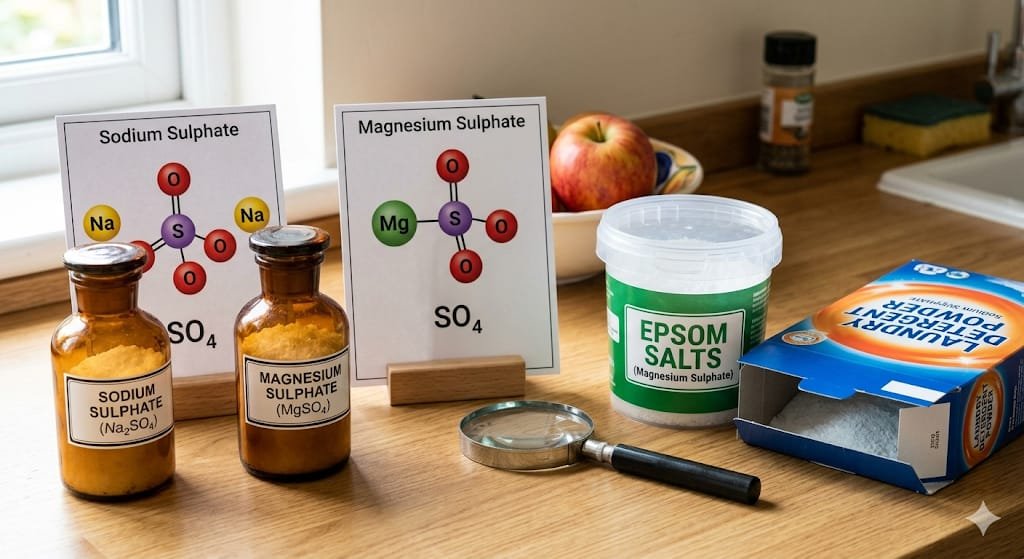
Sulphate Salts in Your Home: Detergents, Epsom Bath, Copper Sulphate & More | Kanha Life Sciences Walk through any Indian home — look under the sink, in the bathroom cabinet, or beside the washing machine — and you’re surrounded by sulphate salts. You just don’t see them listed that way on the label. These compounds are not industrial secrets. They’re everyday ingredients that clean your clothes, soothe your muscles, and preserve your food. Understanding which ones you’re already using helps you make smarter product choices — and get more out of what you buy. At Kanha Life Science, we manufacture several sulphate salts used directly in consumer and household applications. Here’s a factual guide to the most common ones. 1. What Is Sodium Sulphate and Where Is It Found at Home? Sodium sulphate (Na₂SO₄) is the most widely used sulphate salt in household cleaning products. It serves as a filler and flow agent in powdered laundry detergents, ensuring even distribution during manufacturing and preventing the powder from caking. Sodium Sulphate (Na₂SO₄) Also known as: Glauber’s salt (decahydrate form: Na₂SO₄·10H₂O) Brands like Surf Excel, Ariel, Rin, and Tide (powder formats) include sodium sulphate in their formulations. It makes up a significant portion of the white powdery base you pour into your washing machine. Globally, sodium sulphate demand was 12.6 million tonnes in 2024, with detergents representing the largest application segment at over 36% of volume (ChemAnalyst, 2024). The natural form — Glauber’s salt — is obtained from brine deposits, while synthetic sodium sulphate comes as a byproduct of chemical manufacturing. In the home, it’s safe, stable, and effective. It doesn’t contribute to cleaning on its own but makes detergent products easier to produce, store, and use. Common Household Products Containing Sodium Sulphate Powdered laundry detergents (Surf Excel, Ariel, Rin, Tide) Automatic dishwasher powders Some household cleaning boosters — 2. Why Is Epsom Salt (Magnesium Sulphate) a Bathroom Staple? Epsom salt — chemically magnesium sulphate heptahydrate (MgSO₄·7H₂O) — is one of the most versatile sulphate compounds in any household. It takes its name from Epsom in Surrey, England, where the compound was first extracted from spring water in the 17th century. Today, brands like Dr Teal’s, Westlab, SoulTree, and Organic India sell Epsom salt-based bath products in India and globally. When dissolved in warm water, it releases magnesium and sulphate ions that are absorbed through the skin, helping relieve muscle soreness, joint stiffness, and stress. A standard Epsom salt bath uses 200–400 grams per full tub of warm water (Medpak, February 2026). Contains at least 9.7% magnesium and 12.9% sulphur by composition. Beyond bathing, Epsom salt is used as a laxative when taken orally, as a component in beauty scrubs, and as a hair conditioning treatment. Its neutral pH (6–7) makes it suitable for sensitive skin. By 2024, global magnesium sulphate production reached approximately 2.6 million tonnes per year (Wikipedia / magnesium sulfate, 2024). Common Uses of Epsom Salt at Home Muscle soak bath (200–400g per tub) Foot soak for tired feet Hair volumizing treatment Garden fertiliser for magnesium-deficient plants Oral laxative (follow package directions) — 3. Is Copper Sulphate Found in Home Products? Copper sulphate (CuSO₄) — the vivid blue crystalline compound also called blue vitriol — has a limited but specific role in household contexts. It’s primarily found in swimming pool treatments and household fungicide sprays. Products like Cesco Blue Stone and several unbranded pool algaecide concentrates available in hardware stores contain copper sulphate pentahydrate (CuSO₄·5H₂O) as the active ingredient. It kills algae in stagnant water and controls fungal growth on outdoor surfaces. Some multi-purpose fungicides for garden sheds and boundary walls — available from brands like Bayer Garden and Vitax — also contain copper sulphate. It must be handled carefully: direct skin contact requires gloves, and it should never be poured down household drains in concentrated form due to aquatic toxicity. Copper sulphate pentahydrate (CuSO₄·5H₂O) is blue because water molecules surrounding the copper ion absorb red light frequencies, reflecting blue colour. The anhydrous form (CuSO₄) is white-grey. Copper sulphate is also used as a wood preservative in outdoor fencing treatment products, where it’s combined with other agents to prevent rot and fungal decay. Safety Precautions for Copper Sulphate at Home Always wear gloves when handling Keep away from children and pets Never pour concentrated solution down drains Store in clearly labelled, sealed container — 4. Where Does Calcium Sulphate Show Up in Your Kitchen? Calcium sulphate (CaSO₄), commonly known as gypsum, is found in two household contexts you might not expect: food production and water filtration. In the kitchen, calcium sulphate is approved as a food additive (E516) and used as a firming agent and coagulant in tofu production. Brands like Morinaga (Japan), Nasoya, and House Foods use it to give tofu its characteristic firm texture. It’s also used in flour treatment and in some baking powders. In household water filter cartridges — including brands like Aquaguard (Eureka Forbes) and Kent — calcium sulphate is used as a media component. It contributes to water hardness correction in certain filter stages. Calcium sulphate is GRAS (Generally Recognised As Safe) by the US FDA. It’s tasteless, odourless, and stable at room temperature. Common Household Uses of Calcium Sulphate Tofu coagulant (firm tofu) Baking powder component Water filter media Flour treatment agent — 5. What About Ferrous Sulphate in Household Items? Ferrous sulphate (FeSO₄·7H₂O) — also known as iron(II) sulphate or green vitriol — appears in two types of household products: iron supplements and water treatment agents. In India, iron-deficiency anaemia affects approximately 53% of women of reproductive age (WHO, 2023). As a result, ferrous sulphate tablets are among the most commonly prescribed iron supplements. Feronia (Mankind Pharma), Livogen (Bayer), and Orofer (Emcure) are popular brands that use ferrous sulphate as their iron source. Ferrous sulphate is also sold for household water treatment in areas with high manganese content. It reacts with manganese to form insoluble precipitates that can be filtered out, improving water clarity and safety. Ferrous sulphate tablets should

What Are the Common Uses of Sulphate Salt in Industries?
Categories
Uncategorized

Sulphate Salts: Industrial Uses in Detergents, Glass & Textiles | Kanha Life Sciences Sulphate salts quietly power some of the world’s biggest manufacturing sectors. From the detergent on your kitchen shelf to the glass in your window, these compounds are everywhere — yet most people don’t know their names. The global sodium sulphate market alone was valued at USD 4.698 billion in 2024, according to Market Research Future, and it’s projected to reach USD 7.272 billion by 2035 at a CAGR of 4.05%. That scale reflects just how critical sulphate salts have become in modern industry. At Kanha Life Science, we supply high-purity sulphate salts to manufacturers across multiple sectors. This guide provides a clear breakdown of where and how these compounds are used industrially. 1. How Are Sulphate Salts Used in the Detergent Industry? The detergent industry is the single largest consumer of sulphate salts worldwide. Sodium sulphate (Na₂SO₄) — also called Glauber’s salt — accounts for over 36.4% of total sodium sulphate consumption globally, as reported by market analysts in 2024. Sodium Sulphate (Na₂SO₄) Also known as: Glauber’s salt (decahydrate form: Na₂SO₄·10H₂O) In powdered detergents, sodium sulphate functions as a filler and bulking agent. It improves the texture of detergent powders, prevents clumping, and ensures consistent dosing. Brands like Surf Excel, Ariel, and Tide rely on sodium sulphate to maintain the physical properties of their powder formulations. As urbanisation grows across Asia and Africa, powdered detergent demand keeps rising. The detergent segment contributed USD 1.5 billion in 2024 to the sodium sulphate market and is projected to grow to USD 2.4 billion by 2035 (Market Research Future, 2024). Why Detergent Manufacturers Prefer Sodium Sulphate Acts as a flow regulator in powder detergents Prevents caking during storage and transport Improves solubility in cold water washes Cost-effective bulking agent — 2. What Role Do Sulphate Salts Play in Glass Manufacturing? Glass manufacturers use anhydrous sodium sulphate as a fining agent. When added to molten glass at temperatures above 1,400°C, it releases sulphur dioxide gas that pushes out tiny air bubbles trapped in the melt. This produces clearer, higher-quality glass. Glass fining process: Na₂SO₄ → Na₂O + SO₂↑ SO₂ gas removes micro-bubbles from molten glass U.S. shipments of anhydrous sodium sulphate for specialty glass applications grew by 9% annually from 2022 to 2024, according to SNS Insider (2024). Companies like Saint-Gobain, AGC Inc., and Guardian Industries depend on this process to meet optical clarity standards for flat glass, container glass, and fibre glass. The glass manufacturing segment is one of the fastest-expanding end-users in the sulphate market, driven largely by the construction boom across Southeast Asia and the Middle East. Physical Properties for Glass Grade Appearance: White crystalline powder Purity required: >99% anhydrous Melting point: 884°C Moisture content: 5000 mg/kg (practically non-toxic) Personal Protective Equipment Dust mask or respirator for powder handling Safety goggles Chemical resistant gloves (nitrile) Dust collection system for bulk transfer Storage Conditions Store in dry, well-ventilated area Keep bags or containers sealed to prevent moisture absorption Avoid contamination with acids (can release SO₂ gas) Maintain temperature below 40°C for anhydrous grades Suitable storage materials include HDPE drums, paper bags with PE liner, and stainless steel silos. Transportation Classification Sodium sulphate is not classified as dangerous goods for transport under UN regulations. Check local rules for large bulk quantities (>1000 kg). Spill Management In case of spills: Sweep or vacuum spilled material Avoid creating airborne dust Dispose according to local waste regulations Water flush for residual traces (non-hazardous to drains in small amounts) — 8. Frequently Asked Questions Which industry uses sulphate salts the most? The detergent industry is the largest consumer, accounting for over 36.4% of sodium sulphate consumption globally in 2024 (Market Reports World, 2024). Is sodium sulphate the same as Glauber’s salt? Yes. Glauber’s salt is the decahydrate form of sodium sulphate (Na₂SO₄·10H₂O). It is the most common naturally occurring form and is widely used in detergents and glass manufacturing. Which country produces the most sulphate salts industrially? China is the dominant producer, responsible for over 70% of global sodium sulphate output and producing more than 3 million metric tons annually (ChemAnalyst, 2024). Are sulphate salts environmentally safe in industrial processes? When managed correctly, yes. Sustainable solar evaporation methods used by producers like Crimidesa reduce CO₂ emissions per ton by 32% compared to conventional techniques (Market Reports World, 2024). What purity grade is required for pharmaceutical sulphate salts? Pharmaceutical applications typically require >99.5% purity with strict heavy metal limits (USP/EP grade). — Final Thoughts Sulphate salts are foundational to multiple critical industries — from detergents and glass to pharmaceuticals and battery recycling. Their global market is growing steadily, driven by industrial expansion in Asia, Africa, and Latin America. At Kanha Life Science, we supply industrial-grade and high-purity sulphate salts tailored to your manufacturing requirements. Whether you need sodium sulphate for your detergent line or magnesium sulphate for pharmaceutical formulations, our team is ready to assist. Contact Kanha Life Science today for bulk supply enquiries.

Benzyl Benzoate: Industrial Synthesis and Application Guide
Categories
Uncategorized

Benzyl Benzoate: Synthesis, Cosmetic & Medical Applications | Kanha Life Sciences Benzyl Benzoate (C₆H₅COOCH₂C₆H₅) is a versatile chemical compound widely used in multiple industries. From luxury perfume formulations to pharmaceutical treatments for scabies and lice, this ester plays an important role in both cosmetic and medical sectors. This guide explores the industrial synthesis of benzyl benzoate, its role in fragrance and cosmetic products, and important handling and storage guidelines for chemical suppliers and distributors. 1. Synthesis Process: How Esterification Produces Benzyl Benzoate Benzyl benzoate has the molecular formula: C₁₄H₁₂O₂ Molecular Weight: 212.24 g/mol The compound is produced through the esterification reaction between: Benzoic Acid (C₆H₅COOH) Benzyl Alcohol (C₆H₅CH₂OH) This reaction is known as a Fischer Esterification, where an acid catalyst is used to form an ester and water as a byproduct. Industrial Production Process Benzoic acid and benzyl alcohol are mixed in near-equimolar ratios An acid catalyst such as sulfuric acid or p-toluenesulfonic acid is added The mixture is heated to 80–120°C Water formed during the reaction is continuously removed Removing water shifts the equilibrium toward the formation of benzyl benzoate. Alternative Production Methods Other industrial synthesis routes include: Tishchenko reaction using benzaldehyde Reaction of benzyl chloride with sodium benzoate These methods are sometimes used for high-purity pharmaceutical-grade production. Purification Process After synthesis, the crude product undergoes purification steps including: Sodium carbonate wash to remove residual acids Water washing Drying using anhydrous sodium sulfate Vacuum distillation or recrystallization Pharmaceutical & fragrance grade purity: >99% Industrial grade purity: 95–97% Physical Properties Appearance: Clear colorless to pale yellow liquid Boiling Point: 323°C Flash Point: 147°C Density: 1.118 g/mL at 25°C Solubility: Insoluble in water, soluble in ethanol and oils — 2. Cosmetic Applications: Fragrance Fixative and Solvent Benzyl benzoate plays an important role in the perfume and cosmetics industry due to its ability to enhance fragrance longevity and dissolve fragrance ingredients. Fragrance Fixative One of the main cosmetic functions of benzyl benzoate is as a fragrance fixative. It slows the evaporation of volatile fragrance components, allowing perfumes and scented products to last longer on the skin. Because of its high boiling point and low vapor pressure, it stabilizes the fragrance composition. Fragrance Ingredient Benzyl benzoate also contributes its own mild scent profile described as: Slightly sweet Floral Balsamic It blends well with fragrance notes such as: Jasmine Rose Ylang-ylang Solvent Properties In perfume formulation, benzyl benzoate acts as a solvent for difficult-to-dissolve fragrance ingredients such as: Synthetic musks Nitro musks Essential oil components Regulatory Considerations Under EU Cosmetics Regulation, benzyl benzoate must be declared on product labels when present above certain concentrations because it is listed as a fragrance allergen. Leave-on products: label required above 0.001% Rinse-off products: label required above 0.01% — 3. Handling and Storage Guidelines Chemical distributors handling benzyl benzoate must follow appropriate safety practices to ensure safe storage and transportation. Health Hazards Benzyl benzoate has relatively low toxicity but may cause: Skin irritation Eye irritation Allergic dermatitis with prolonged exposure LD50 (oral, rat): ~1700 mg/kg Personal Protective Equipment Chemical resistant gloves (nitrile or neoprene) Safety goggles Protective clothing Respirator in high vapor environments Storage Conditions Store at 15–30°C Keep containers tightly sealed Avoid direct sunlight and heat sources Store away from oxidizing chemicals Suitable storage materials include stainless steel tanks, HDPE containers, and glass-lined vessels. Transportation Classification UN3082 Environmentally Hazardous Substance, Liquid, N.O.S. Spill Management In case of spills: Contain using sand or absorbent materials Prevent entry into drains or waterways Collect and dispose according to chemical waste regulations — Final Thoughts Benzyl benzoate is an important compound across fragrance, pharmaceutical, and industrial sectors. Its chemical stability, solvent properties, and fragrance-fixation ability make it highly valuable for perfume manufacturers, while its medicinal uses highlight its pharmaceutical importance. For industrial buyers and chemical distributors, understanding synthesis methods, purity standards, and safe handling procedures ensures optimal product performance and regulatory compliance.

Decoding the Calcium Propionate Formula for Industrial Use
Categories
Uncategorized

Calcium Propionate Formula & Structure for Industrial Baking | Kanha Life Sciences Calcium Propionate (Ca(C₂H₅COO)₂) is the calcium salt of propionic acid and one of the most widely used preservatives in the food industry. It is primarily used in bakery products to prevent mold growth and extend shelf life. For industrial bakeries, food technologists, and procurement specialists, understanding the molecular structure, thermal behavior, and quality specifications of calcium propionate is essential for consistent product performance and supply chain reliability. 1. Molecular Structure: Understanding Ca(C₂H₅COO)₂ Calcium Propionate has the molecular formula: Ca(CH₃CH₂COO)₂ | Ca(C₂H₅COO)₂ | CaC₆H₁₀O₄ Molecular Weight: 186.22 g/mol Its IUPAC name is calcium dipropanoate, reflecting that it is the calcium salt derived from two molecules of propionic acid. Structurally, the compound consists of: One calcium ion (Ca²⁺) Two propionate ions (CH₃CH₂COO⁻) Each propionate ion contains: A methyl group (CH₃) A methylene group (CH₂) A carboxylate group (COO⁻) This relatively short carbon chain is critical to its antimicrobial activity in bakery products. Antimicrobial Mechanism In the slightly acidic environment of bread dough (pH 5.0–6.0), calcium propionate releases propionic acid which penetrates microbial cell membranes. Once inside microbial cells, the acid disrupts: Intracellular pH balance Enzyme activity Metabolic processes This effectively inhibits molds such as: Aspergillus species Penicillium species Bacillus subtilis (rope spoilage bacteria) Appearance: White crystalline powder or granules Odor: Slight cheese-like odor Water Solubility: ~400 g/L at 20°C — 2. Heat Stability During Baking A major advantage of calcium propionate in bakery applications is its excellent heat stability. Melting Point: ~300°C (with decomposition) Typical baking temperatures: Oven temperature: 180–230°C Internal bread temperature: 95–100°C Because calcium propionate remains stable well above these temperatures, it does not degrade during baking. This ensures that the preservative remains active in the finished product. Post-Baking Effectiveness After baking, calcium propionate continues to protect the product against mold growth during storage. Shelf life without preservative: 3–5 days Shelf life with calcium propionate: 7–14 days or longer Recommended Dosage Industrial bakeries typically use calcium propionate at: 0.1% – 0.4% of flour weight Higher levels above 0.5% may slow yeast fermentation and affect dough rise. — 3. Purchasing Advice: Identifying High-Purity Industrial Grades When sourcing calcium propionate for industrial use, buyers should verify purity standards and supplier documentation. Purity Standards Assay: 98.0% – 100.5% Lead (Pb): ≤ 2 ppm Total Heavy Metals: ≤ 10 ppm Food-grade material should meet standards such as: Food Chemicals Codex (FCC) European Pharmacopoeia FDA or FSSAI compliance Physical Forms Available Powder – fast dissolution Granular – improved flowability Agglomerated – dust-free handling Documents to Request From Suppliers Certificate of Analysis (CoA) Halal certification Kosher certification FSSAI / FDA compliance documentation GMO-free declaration Quality Warning Signs Yellow or off-white color Strong rancid odor Caking or hard lumps Purity below 97% — Final Thoughts Calcium propionate remains one of the most effective and reliable preservatives used in industrial baking. Its stable molecular structure, high heat resistance, and strong antifungal properties make it ideal for extending the shelf life of bread and baked goods. By selecting high-purity grades and working with verified suppliers, food manufacturers can ensure consistent product quality and regulatory compliance.

The Role of Benzyl Alcohol as a Pharmaceutical Preservative
Categories
Uncategorized

Benzyl Alcohol as a Pharmaceutical Preservative | Safety & Formulation Guide Benzyl Alcohol (C₆H₅CH₂OH) is one of the most widely used preservatives in pharmaceutical formulations, cosmetic products, and personal care applications. Its bacteriostatic properties, favorable safety profile at regulated concentrations, and excellent solubility characteristics make it a reliable preservative for multi-dose injectable drugs, topical medications, and cosmetic formulations. In this article, we explore the science behind benzyl alcohol’s antimicrobial action, its formulation considerations, and regulatory guidelines that ensure safe use across pharmaceutical and cosmetic industries. 1. Bacteriostatic Properties: How Benzyl Alcohol Inhibits Bacterial Growth Benzyl alcohol functions primarily as a bacteriostatic agent. This means it inhibits the growth and reproduction of bacteria rather than directly killing them, helping maintain sterility in multi-dose pharmaceutical containers during repeated use. The antimicrobial activity occurs through disruption of bacterial cell membranes. Benzyl alcohol has amphiphilic characteristics, containing both a hydrophilic hydroxyl group and a hydrophobic aromatic ring. This structure allows it to integrate into the phospholipid bilayer of bacterial cell membranes, causing: Membrane destabilization Disruption of nutrient transport Inhibition of enzyme activity Suppression of bacterial metabolism Typical effective concentration range: 0.9% – 2.0% w/v Benzyl alcohol shows antimicrobial activity against several microorganisms including: Staphylococcus aureus Pseudomonas aeruginosa Escherichia coli Candida albicans (limited antifungal activity) — 2. Formulation Stability: Solubility in Water vs Organic Solvents Understanding benzyl alcohol’s solubility behavior is essential for pharmaceutical formulation. Benzyl alcohol is slightly soluble in water but highly soluble in most organic solvents. Water solubility: approximately 35 g/L (3.5% w/v) at 25°C Miscible with ethanol Miscible with diethyl ether Miscible with chloroform Compatible with most pharmaceutical organic solvents Because of this solubility profile, benzyl alcohol often plays two roles in formulations: Antimicrobial preservative Co-solvent for poorly soluble APIs Behavior in Emulsions In oil-in-water emulsions, benzyl alcohol distributes between the oil and aqueous phases according to its partition coefficient: Log P ≈ 1.10 Formulators must ensure sufficient concentration remains in the aqueous phase where microbial contamination is most likely to occur. Thermal and Storage Stability Benzyl alcohol remains chemically stable across normal pharmaceutical storage temperatures. Stable between 5°C – 40°C Boiling point: 205°C Low volatility under normal storage conditions Over long storage periods, oxidation may convert benzyl alcohol into benzaldehyde, which can affect odor. This is why formulations sometimes include antioxidants and protective packaging. — 3. Safety Data: Regulatory Limits in Cosmetics and Injectable Drugs Regulatory agencies worldwide have established clear safety limits for benzyl alcohol use in pharmaceuticals and cosmetic products. Injectable Drugs The FDA allows benzyl alcohol as a preservative in multi-dose injectable vials at concentrations up to: Maximum concentration: 0.9% w/v However, benzyl alcohol is not recommended for use in neonates due to the risk of Gasping Syndrome. Newborns have immature metabolic pathways that cannot efficiently convert benzyl alcohol into benzoic acid derivatives, leading to accumulation and toxicity. — Cosmetics (EU & USA) Under EU Cosmetics Regulation (EC) No 1223/2009, benzyl alcohol is permitted as a preservative in cosmetic formulations at a maximum concentration of: Maximum cosmetic concentration: 1% Products containing benzyl alcohol above 0.001% must declare it on the ingredient list as it is classified as a potential fragrance allergen. — Topical Pharmaceutical Products Higher concentrations may be used in short-contact topical treatments. For example, a 5% benzyl alcohol lotion has been approved for treating head lice. Typical topical pharmaceutical concentration ranges: 0.5% – 2% in creams 1% – 5% in short-contact treatments — Final Thoughts Benzyl alcohol remains one of the most versatile preservatives used in pharmaceutical and cosmetic formulations. Its bacteriostatic activity, favorable solubility characteristics, and well-established safety guidelines make it a reliable ingredient for protecting multi-dose medications and personal care products from microbial contamination. However, formulators must carefully consider regulatory limits, patient population safety, and formulation stability to ensure optimal performance and compliance.